Leave Your Message

How to Choose Food Waste Treatment Equipment in 2026?

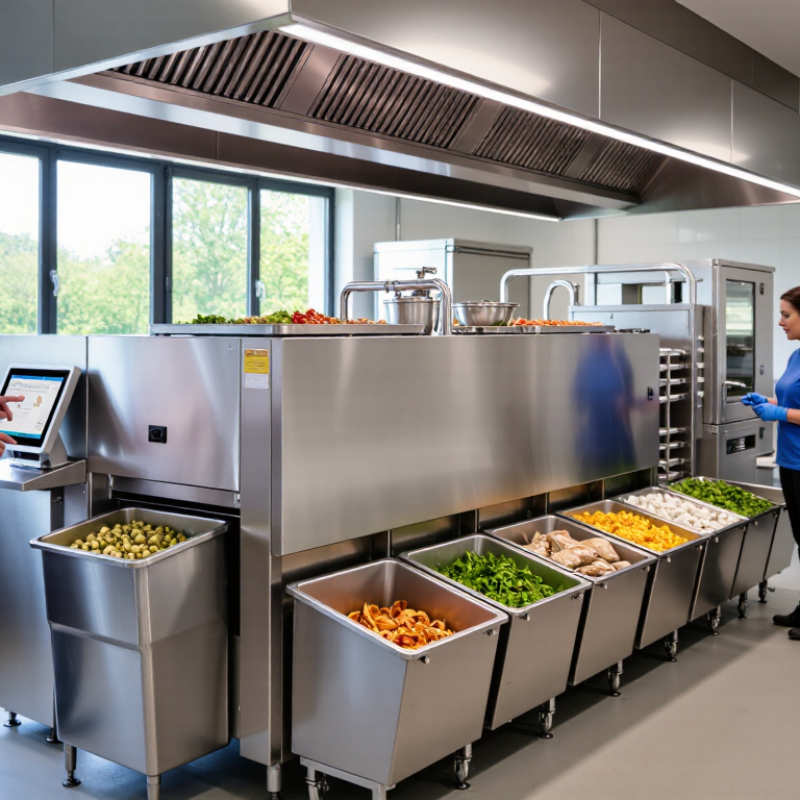
Choosing Food Waste Treatment Equipment in 2026 starts with a clear picture of the waste itself. A hotel kitchen may produce wet scraps, while a food factory may handle steady batches with packaging contamination. Those differences affect capacity, preprocessing, odor control, and the final output. Food Waste Treatment Equipment should fit daily operating conditions, not just a supplier’s headline capacity. A machine rated for a busy shift can still disappoint if cleaning takes hours or spare parts are difficult to source.

Dana Gunders, a food-waste expert, has emphasized prevention before disposal; in paraphrase, her practical message is: “Prevent what you can; treat only what remains.” That principle matters. Treatment equipment is not a substitute for measuring avoidable waste. Buyers should check feedstock limits, energy and water needs, staffing, maintenance access, and how the treated material will be used or managed. Ask for operating data from a site with similar waste, and test a representative sample when possible. A tidy showroom demonstration proves little.

There is no perfect machine. The right choice depends on reliable measurements, realistic costs, and a service plan that holds up on a wet Monday morning. We may still underestimate downtime. That deserves a closer look.

How to Choose Food Waste Treatment Equipment in 2026?

Assess Your Food Waste Types, Volume, and Daily Output

How to Choose Food Waste Treatment Equipment in 2026?

Assess Your Food Waste Types, Volume, and Daily Output

Before comparing equipment, record what your kitchen actually discards for at least seven typical days. Separate preparation scraps, cooked leftovers, liquids, packaging, and bones where relevant. Their moisture, oil content, and particle size can affect handling and treatment. A café with mostly vegetable trimmings has different needs from a hotel serving meat-heavy meals. Do not rely on one unusually quiet day.

Measure daily weight, not just bin capacity. Weigh each container at closing, and note peak periods, weekends, and seasonal changes. Then estimate average and peak output separately. A system sized only for the average may struggle after a busy service. One oversized for rare peaks can waste floor space and energy. These figures are estimates, not promises; staff habits and menus can shift them.

Tips: Keep a simple log with the date, waste category, kilograms, and any unusual event. Check whether liquids need separate handling, and confirm the equipment accepts your largest scraps. Ask suppliers for written capacity assumptions and cleaning requirements. If your records are incomplete, say so; a cautious site assessment is better than a confident guess.

Compare Food Waste Treatment Technologies and Equipment

Food waste equipment should be compared by what happens to each kilogram after collection, not by machine size alone. Grinding reduces particle size, but it does not make waste disappear; separated liquid still needs a planned route. A dewatering unit can shrink wet loads quickly, but its damp solids need careful storage. On-site aerobic units use oxygen and heat to process organics. Check cycle time, ventilation, and the intended use of the output. Anaerobic systems can produce biogas from suitable feedstock, but they need steady input, trained operation, and supporting infrastructure. Real kitchens are messy.

Compare equipment using measured daily kilograms, peak loads, contamination rates, and available floor space. A unit sized for an average day may struggle after a banquet or during seasonal peaks. Ask for water and energy use per kilogram, cleaning steps, noise levels, and service access. Watch a full operating cycle, including loading and washdown. Small detail, big difference.

Control odor by locating equipment near collection points without blocking staff routes. Check filter and exhaust maintenance requirements. If the output is intended for composting, digestion, or another downstream process, confirm acceptance criteria with the receiving operator before purchase. Plans wobble here.

Match Equipment Capacity to Site, Utilities, and Workflow

Choosing food waste treatment equipment starts with the room, not the brochure. Measure the peak. Not just averages. Weigh a typical week of scraps, then note the busiest service period and seasonal surges. A dining hall serving hundreds of lunches may produce much of its daily waste in one short window, so hourly intake matters as much as total weight. Include bones, liquid-rich leftovers, and occasional packaging mistakes; real waste is rarely as tidy as a sample bin. Allow some capacity headroom, but remember that an oversized unit can waste floor space and energy.

Check the full site route, from prep area to equipment and collection point. Measure doorways, turning space, and room for cleaning and maintenance. Confirm electrical capacity, water supply, drainage, ventilation, and floor loading with qualified site staff. Then map the daily workflow: who feeds the unit, when it runs, and who cleans it. Ask suppliers for throughput data using waste similar to yours, not just ideal test material. Small details matter. A machine that fits on paper may block a trolley route or clash with a shift change. Some estimates will be imperfect; revisit them after tracking actual waste for several weeks.

How to Choose Food Waste Treatment Equipment in 2026

Match equipment capacity to site, utilities, and workflow

Planning example only—not industry benchmark data. The example loads represent hypothetical site measurements; target capacity is calculated at 125% of daily scraps to allow operating headroom. Weigh scraps for at least seven representative days, then check equipment requirements against available space, power, water, drainage, and staff workflow.

Check 2026 Regulations, Emissions, and Waste-Output Requirements

Before comparing equipment, identify the regulations that apply to your site and waste stream. Requirements may vary by location, facility type, and treatment method. Ask the relevant local authority about permits, operating limits, monitoring, and recordkeeping. Keep records. Request emissions data for the actual operating conditions you expect, not just ideal test settings. Check how measurements were taken and whether they cover odors, dust, wastewater, or other locally regulated outputs. A polished brochure is not the same as verified performance; ask for test reports and clarify what they do not measure.

Waste outputs deserve equal attention. Ask how much treated material, wastewater, screening residue, or other by-product the system produces per tonne of incoming food waste. Confirm whether each output can be reused, sent to a permitted facility, or needs further treatment under local rules. Measure it. For example, a kitchen handling wet prep scraps may face different storage and drainage demands from a site processing mostly dry bakery waste. Compare figures using your own waste samples and seasonal volumes where possible. Suppliers may not have data for your exact mix, so treat estimates as estimates. Leave room in the budget and layout for sampling, cleaning, and compliant output handling.

How to Choose Food Waste Treatment Equipment in 2026? — Check 2026 Regulations, Emissions, and Waste-Output Requirements

Market / Requirement What Applies in 2026 Emissions and Permits to Check Waste-Output Requirements Equipment Selection Check Official Reference
European Union — separate bio-waste management EU Member States must ensure bio-waste is separated and recycled at source, or collected separately, under the Waste Framework Directive. National implementation determines the obligations for individual sites. Check national and local environmental permitting for the proposed treatment process, site capacity, odour, noise, wastewater, and air emissions. Requirements depend on the installation and location. Confirm that compost, digestate, or other residues meet applicable national rules for use, recovery, or disposal. Do not assume a processed output is automatically a saleable product. Compare source-separation compatibility, contamination tolerance, throughput, process-water needs, and the documented destination for every output stream. European Commission: Biodegradable waste
France — bio-waste sorting Since 1 January 2024, bio-waste sorting at source has applied to all producers and holders, including households, with collection or on-site treatment arrangements determined locally. Verify local planning, environmental, odour, noise, and wastewater requirements before installing an on-site unit. Applicable rules depend on the process and site. Check local arrangements for collecting or using compost and digestate, and confirm that any proposed agricultural or land application complies with applicable requirements. Assess whether the equipment supports the site’s required separation system and whether an authorised, practical outlet exists for treated material and rejects. French Ministry: Bio-waste sorting
England — workplace recycling Under Simpler Recycling, businesses and relevant non-domestic premises generally have to arrange separate collection of food waste from 31 March 2025. Micro-firms with fewer than 10 full-time-equivalent employees have until 31 March 2027. Check whether on-site treatment requires environmental permits or exemptions, and assess odour, noise, wastewater, and any applicable local controls. Establish how treated material and any rejected waste will be handled. An on-site process does not remove the need to comply with applicable waste and environmental rules. For 2026, confirm whether the site is covered, including any applicable business-size exception. Compare on-site treatment with separate collection and verify the approved route for outputs. UK Government: Simpler Recycling in England
California, United States — organic waste diversion SB 1383 establishes statewide targets, including a 75% reduction in organic waste disposal from the 2014 level by 2025. Local jurisdictions implement collection and edible-food-recovery requirements; duties vary by generator type and local rules. Check local air-district and wastewater requirements, as well as any applicable environmental permit or exemption. No single equipment-specific emissions limit applies to every installation. Confirm that compost, digestate, wastewater, and residuals have compliant destinations. Edible food recovery obligations, where applicable, are distinct from treatment of inedible food scraps. Check local organics-service rules before buying. Require a clear mass balance covering incoming waste, recovered products, wastewater, rejects, and any reported diversion data. CalRecycle: Short-Lived Climate Pollutants / SB 1383
New York City, United States — commercial organics Commercial organics rules apply to specified businesses and institutions based on factors such as business type and size. Operators should confirm current eligibility and requirements with the city rather than assume that all premises are covered. Check applicable city and state air, wastewater, building, and environmental requirements for the proposed process and installation. Confirm the permitted or accepted destination for processed material, wastewater, and contaminants; follow the city’s applicable separation and handling requirements. Use the current city eligibility guidance. Compare treatment capacity with actual daily and seasonal food-scrap volumes, and verify that the selected system is acceptable for the site’s compliance plan. NYC Department of Sanitation: Food waste for businesses
All markets — air emissions and odour Emission limits and permit triggers depend on jurisdiction, process design, treatment capacity, feedstock, and site conditions. Food-waste equipment does not have one universal emissions standard applicable everywhere. Ask the regulator or a qualified local adviser whether air permits, odour controls, biofilters, exhaust treatment, noise controls, or monitoring are required. For combustion or thermal processes, check the specific rules for that technology. Include air-treatment media, condensate, wastewater, and captured residues in the output plan; these streams may need separate handling. Request process-specific emissions data and a written description of operating conditions, monitoring, maintenance, and control-system requirements. Treat vendor performance claims as site- and feedstock-dependent. US EPA: Air permitting overview
All markets — digestate and compost quality Output status is determined by applicable national and local rules. Processing alone does not necessarily make digestate or compost a product, fertiliser, or unrestricted material. Check whether storage, drying, screening, or further processing creates additional permit or nuisance-control requirements at the site. Verify quality testing, contamination limits, permitted uses, labelling, and land-application rules. Identify a documented outlet for material that does not meet product or recovery criteria. Before purchase, obtain written acceptance criteria from the intended recipient and confirm the equipment can consistently meet them using the site’s actual feedstock. EU Fertilising Products Regulation (where applicable)

Selection note: Regulatory duties vary by country, state, municipality, business type, and installation. Verify current local requirements and permits before selecting equipment. Compare systems using measured throughput, energy and water use, contamination handling, emissions controls, operating costs, and a confirmed destination for every output.

Compare Lifecycle Costs, Maintenance, and Supplier Support

How to Choose Food Waste Treatment Equipment in 2026?

Compare Lifecycle Costs, Maintenance, and Supplier Support

A low purchase price can hide higher operating costs. Compare electricity, water, labor, consumables, and residual-waste hauling over the equipment’s expected service life. Ask suppliers to state their assumptions, including daily input volume and operating hours. Then test the estimate against your own kitchen records. Real waste is rarely as consistent as a quotation spreadsheet suggests.

Maintenance affects both cost and workflow. Check how often screens, pumps, blades, or filters need inspection or replacement, and whether staff can reach them without dismantling nearby equipment. Ask for a maintenance schedule, common spare-parts list, and realistic parts delivery times. A short service visit can become a long interruption. Keep that risk in view.

Supplier support matters after installation. Confirm who handles commissioning, operator training, troubleshooting, and routine servicing. Ask how quickly support responds, and whether help is available during your operating hours. Request references from sites with similar waste volumes, then ask what required the most upkeep. A site visit is useful. So is an honest conversation about limitations. Compare written service terms, not just verbal promises; unclear responsibilities can leave your team waiting when equipment needs attention.