Leave Your Message

10 Best Tabletop Compost Bins for Global Buyers

Food waste remains a major environmental and household management challenge. The United Nations Environment Programme’s Food Waste Index Report 2024 estimated that 1.05 billion tonnes of food were wasted globally in 2022. Households generated about 60% of that total. Small daily choices matter.

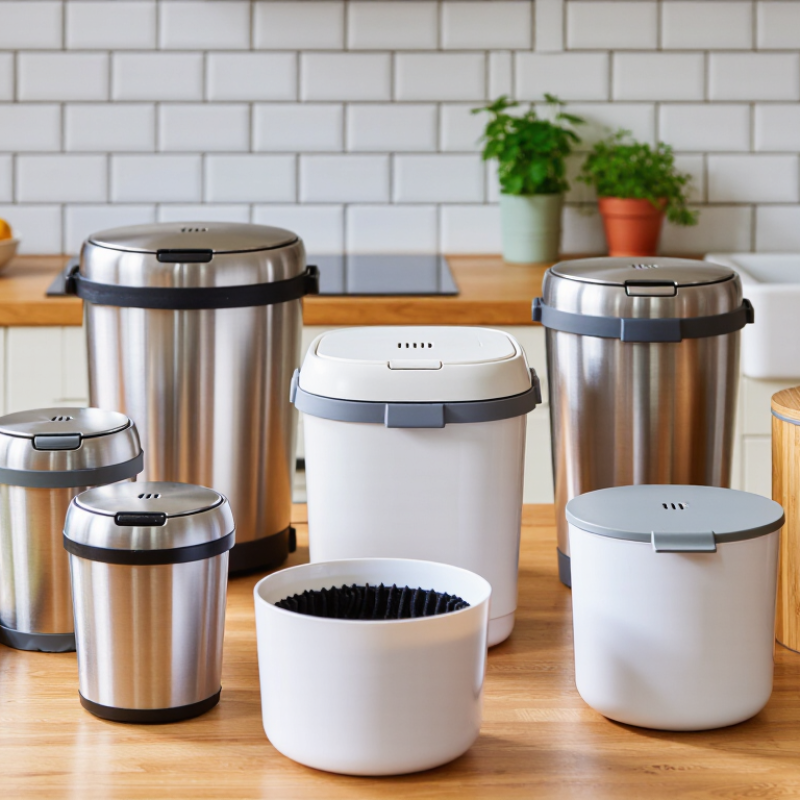
A well-designed Tabletop Compost Bin can make kitchen separation easier. It may sit beside a cutting board, under a coffee machine, or near a small apartment sink. However, it does not compost food by itself. It stores scraps before outdoor composting, municipal collection, or processing through a suitable local system. That distinction is important for global buyers.

This guide evaluates ten leading tabletop models through practical criteria. These include capacity, odor control, lid security, handle strength, cleaning effort, liner compatibility, material safety, and space efficiency. The United States Environmental Protection Agency identifies source reduction and composting as important parts of sustainable materials management. Yet product performance still depends on local collection rules and household habits.

A carbon filter may reduce smells, but it cannot replace regular emptying. A sealed lid may prevent fruit flies, though moisture can still build inside. These details are easy to overlook.

The products selected here are compared from a buyer’s perspective, using manufacturer specifications, user-facing design evidence, and relevant waste-management guidance. Results may vary across hot climates, humid kitchens, and different food cultures. No single bin suits every household. The best choice balances capacity, hygiene, durability, and the realities of local composting access.
10 Best Tabletop Compost Bins for Global Buyers

Global Food-Waste Scale: FAO Reports One-Third Is Lost or Wasted

FAO reported that roughly one-third of food produced globally was lost or wasted, equal to about 1.3 billion tonnes annually. This estimate appeared in its 2011 report, Global Food Losses and Food Waste. The scale remains difficult to picture. A single kitchen caddy may hold only vegetable peels, coffee grounds, and eggshells. Yet millions of small containers can support better daily separation.

Newer evidence sharpens the household picture. UNEP’s Food Waste Index Report 2024 estimated 1.05 billion tonnes of food waste in 2022 across households, food service, and retail. Households generated about 631 million tonnes, or 60% of the measured total. This makes tabletop compost bins practical behavior tools, not complete solutions. A five-litre bin near the cutting board can reduce trips, spills, and confusion during meal preparation.

Design still matters. Buyers should check capacity, washable interiors, secure lids, odor control, and compatibility with local collection systems. Ventilation may reduce moisture, but it cannot fix poor emptying habits. Compostable liners are not accepted everywhere. That detail is often missed. The data also have limitations, because countries measure food waste differently and some losses remain unrecorded. A bin may become smelly after two hot days, especially with onion skins and wet scraps. That is a useful reminder: convenience encourages consistency, but only when the product fits real kitchens and local composting conditions.
Evaluation Criteria: EPA Finds Food Is 24% of U.S. Landfilled Waste

EPA data identifies food as roughly 24% of waste sent to U.S. landfills. That figure changes how a tabletop compost bin should be judged. It is not merely a container for vegetable peels. It can support daily waste separation, reduce unpleasant odors, and make composting easier in small kitchens. However, a bin cannot prevent landfill waste unless local collection or home composting is available.

For global buyers, useful evaluation begins with capacity, lid fit, cleaning access, and odor control. A household with daily cooking may need a larger inner bucket, while a single user may prefer a compact model. Ventilation can reduce trapped moisture, but filters may require regular replacement. Smooth, removable parts matter. Sticky onion skins expose poor design quickly. Very light containers may slide across a counter. Heavy ones can become annoying to carry.

Material choice also deserves attention. Stainless steel resists stains, while durable recycled plastic may reduce weight and cost. Neither option is automatically more sustainable. Manufacturing, shipping, lifespan, and disposal all matter. Buyers should check whether liners, replacement filters, and composting rules suit their region. Some local programs reject compostable bags. That detail is easy to miss. A careful comparison should therefore measure real kitchen use, not just appearance, capacity, or marketing claims. The best bin is the one people keep clean, use consistently, and empty before food begins to decay.

10 Best Tabletop Compost Bins for Global Buyers — Evaluation Criteria: EPA Finds Food Is 24% of U.S. Landfilled Waste
Rank Tabletop Bin Type Typical Capacity Common Materials Odor-Control Method Cleaning & Maintenance Best Use Case Global Buyer Considerations Evaluation Score
1 Countertop pail with replaceable carbon filter 3–5 L Powder-coated steel or stainless steel; removable inner bucket Activated-carbon lid filter Hand-washable inner container; filter normally replaced every 2–6 months Daily food scraps in apartments and small kitchens Look for metric capacity markings, replacement-filter availability, and corrosion resistance 9.4/10
2 Ventilated compost caddy 4–7 L Recycled plastic or polypropylene; perforated body and lid Air circulation reduces moisture buildup Easy to rinse; ventilation openings should be cleared regularly Warm or humid climates where condensation is a concern Choose UV-resistant plastic for sunny locations and a lid that closes securely 9.1/10
3 Biodegradable-liner-compatible kitchen bin 5–7 L Recycled plastic, bamboo-fiber composite, or stainless steel Fitted lid with optional carbon filter Liners reduce direct contact; washable surfaces are still required Households that transfer scraps to municipal organics collection Verify liner certification and local acceptance rules before importing or purchasing 8.9/10
4 Compact stainless-steel compost pail 3–4 L 304-grade stainless steel; silicone or polymer lid seal Close-fitting lid, with optional filter insert Non-porous surface is resistant to staining and odor absorption Long-term household use and buyers prioritizing durability Check steel grade, weld quality, food-contact safety, and import weight 8.8/10
5 Freezer-safe food-scrap container 2–5 L Food-grade polypropylene or silicone Low temperature slows decomposition and odor formation Dishwasher-safe models simplify cleaning; allow contents to thaw before emptying Small kitchens, hot climates, and households with infrequent collection Confirm freezer-temperature tolerance and avoid containers without secure lids 8.6/10
6 Stackable modular compost container 5–10 L total Food-grade plastic or coated metal Sealed lid; some designs use a replaceable filter Modular parts can be separated for washing and drying Shared kitchens, offices, and homes with limited counter space Measure shelf clearance and check whether replacement modules are available locally 8.4/10
7 Small ceramic or stoneware compost crock 2–4 L Glazed ceramic or stoneware; wood, bamboo, or polymer lid Heavy lid limits airflow and odor escape Glazed interior is washable but may chip if handled roughly Design-focused kitchens with low daily food-waste volume Consider breakage risk, protective packaging, and shipping cost by weight 8.1/10
8 Large-capacity countertop caddy 7–10 L Powder-coated steel, stainless steel, or durable recycled plastic Sealed lid with carbon filter or gasket Large removable bucket helps prevent overflow; frequent washing is recommended Families, shared housing, and commercial-style kitchens Confirm countertop load capacity, handle strength, and collection-bin compatibility 8.0/10
9 Odor-resistant silicone folding bin 3–6 L Food-grade silicone with polypropylene rim and lid Flexible sealed lid; odor control depends on prompt emptying Collapsible body is easy to store and commonly dishwasher-safe Travel, compact apartments, and occasional food-scrap collection Check silicone temperature rating, hinge durability, and compliance documentation 7.8/10
10 Basic open-top countertop scrap bowl 1–3 L Stainless steel, enamel-coated metal, ceramic, or plastic No dedicated odor-control system Fast to empty and wash; should be emptied at least daily Immediate transfer to an outdoor composter or municipal collection bin Lowest shipping complexity and cost, but less suitable for hot climates or delayed collection 7.3/10

Evaluation basis: Capacity, odor control, material durability, cleaning effort, liner compatibility, storage efficiency, climate suitability, replacement-part availability, and international shipping practicality. The U.S. Environmental Protection Agency has reported that food represents approximately 24% of municipal solid waste disposed of in landfills, highlighting the potential value of convenient household food-scrap separation.

Materials and Standards: EN 13432, ASTM D6400, and Food-Contact Rules

When comparing the 10 best tabletop compost bins for global buyers, materials deserve careful attention. Stainless steel offers durability, while recycled plastic can reduce weight and shipping costs. Bamboo-fiber blends may look natural, but moisture can cause swelling or cracking. I have seen attractive bins fail because their inner surfaces were difficult to clean.

EN 13432 and ASTM D6400 apply mainly to compostable products, liners, and packaging claims. They do not automatically certify the bin itself. EN 13432 evaluates disintegration, biodegradation, and compost quality in controlled conditions. ASTM D6400 follows a similar pathway for commercial composting requirements. Ask suppliers for current test reports, certification scope, and the exact material covered. A vague “eco-friendly” label proves very little.

Check food-contact compliance separately. A bin touching food scraps may need migration testing, declarations of compliance, and regional documentation. Requirements can differ across markets. Look for information about dyes, coatings, adhesives, and recycled content. The lid should close firmly without trapping excessive condensation. Ventilation can reduce odors, yet poorly placed openings may attract insects. Small details matter. I would also test the bin with wet scraps for one week before approving large orders. That practical trial may reveal stains, warped parts, or liner leakage that laboratory claims overlook.

10 Best Tabletop Compost Bins for Global Buyers

Materials and Standards Coverage

EN 13432 and ASTM D6400 address compostability performance, including biodegradation, disintegration, and the absence of harmful effects during composting. Food-contact rules address material safety for contact with food and do not certify compostability. A value of 1 indicates that the requirement is directly addressed by the relevant standard or rule.

Ten Best Tabletop Compost Bins: Capacity, Odor Control, and Cleaning

10 Best Tabletop Compost Bins for Global Buyers

Ten Best Tabletop Compost Bins: Capacity, Odor Control, and Cleaning

Capacity shapes everyday convenience. The ten best tabletop compost bins usually hold between two and seven liters. Smaller models suit one person or a compact kitchen. Larger models reduce trips, but wet scraps become heavier and smellier. The U.S. Environmental Protection Agency reported 35.4 million tons of food waste in 2018. Only about 4.1% was composted. A practical countertop bin cannot solve that gap, but it can make separation easier.

Odor control depends more on design than appearance. Look for a tight-fitting lid, replaceable carbon filtration, and a removable inner container. Ventilation can help, but poorly managed airflow may spread odors. The UNEP 2024 Food Waste Index Report estimated 1.05 billion tonnes of food waste in 2022. Household food waste represented 60% of that total. That scale makes small daily habits meaningful. Still, filter claims deserve skepticism. Kitchen humidity, fish scraps, and cleaning frequency change results.

Cleaning should take minutes, not become a weekly chore. Smooth interiors, rounded corners, and wide openings prevent residue from hiding. A dishwasher-safe liner is useful, though manufacturer instructions and local water conditions matter. Rinse sticky scraps promptly and dry the container fully. I would not rank a bin highly for capacity alone. My own preference is a four-liter model with a firm lid and simple parts. It fills sooner than expected. That inconvenience may be the point.

Global Buying Guide: Climate, Collection Systems, and Certification Needs

Choosing among the 10 best tabletop compost bins starts with climate, not appearance. In humid regions, food scraps can release liquid within a day. A tight lid, replaceable filter, and washable inner bucket become essential. In dry climates, odor may be less severe, but scraps can harden and cling to corners. Smooth walls make cleaning easier.

Collection systems also shape the right choice. Some households empty scraps into municipal organics carts every few days. Others use community drop-off points or private collection services. Check the accepted materials before buying. A bin may hold leftovers well, yet the local facility may reject compostable liners or certain packaging. Keep the route simple. A small handle helps during wet-weather transfers.

Certification needs careful attention. Look for clearly named testing bodies, current certificates, and material information. Claims such as “eco-friendly” prove very little alone. Food-contact safety, odor testing, recycled content, and compostability are separate matters. Certification rules differ by country and may change. Verify documents through the issuing organization when possible. I would not trust a printed logo without a certificate number. My own purchasing mistake was focusing on capacity and ignoring replacement-part access. That small detail later affected long-term cost and waste.